
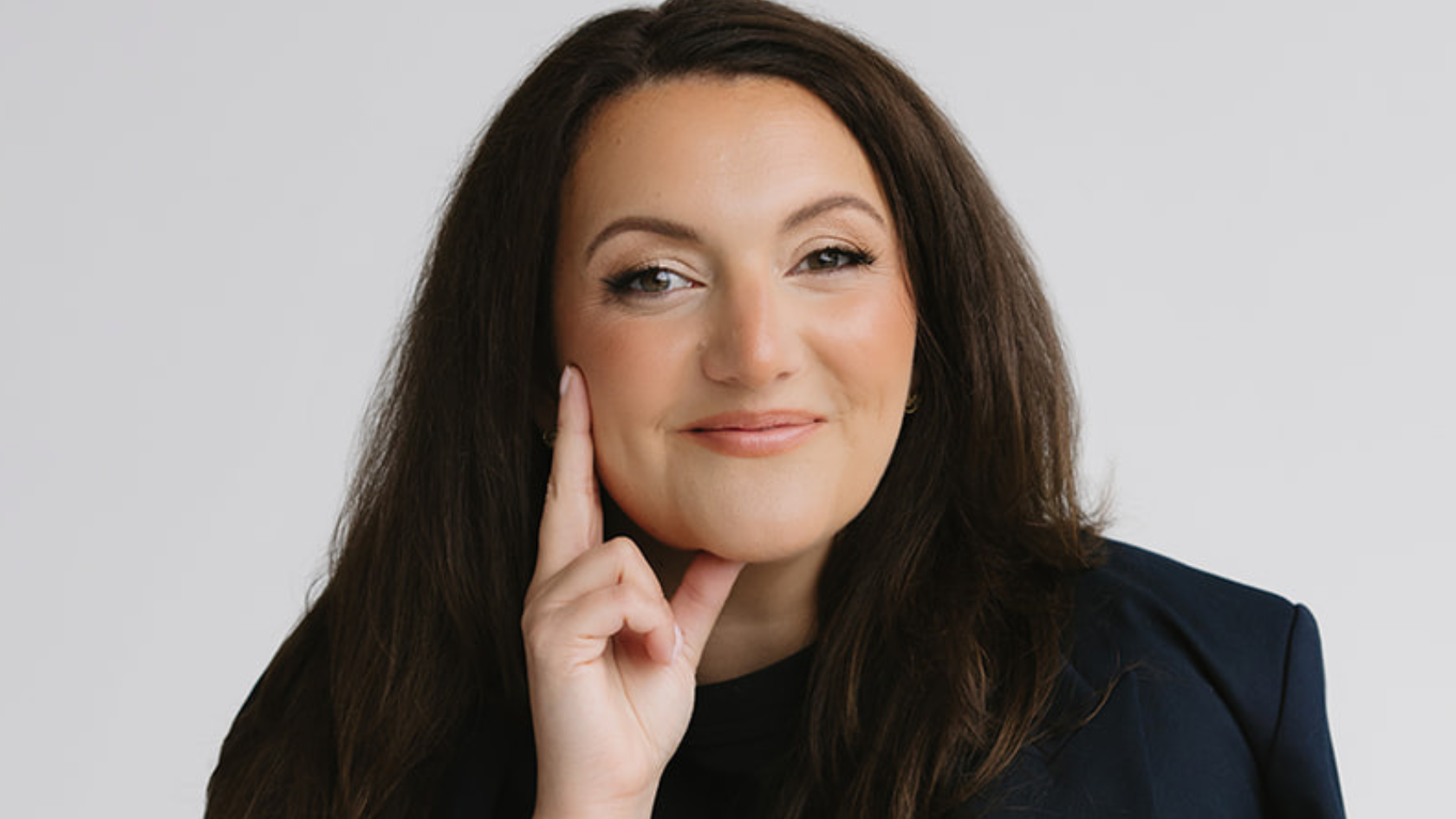
Jessica Flynn, Founder, The Flynn Collaboration, The You Power Project
Words of wisdom: When young people—are empowered to believe in their ideas and take aligned action, they change their lives and their communities. And that changes everything.
Country: Canada
Website: https://www.theflynncollaboration.com
Industry: Education
Organization size: 4
SUBSCRIBE so you do not miss an episode of Wave-Making Women sharing their wisdom and inspiration to generate a social impact.
Interview with Jessica Flynn, Founder, Principal, The Flynn Collaboration, Canada
Listen here or on your favorite platform.




In this episode, we explore:
-
Why mindset, entrepreneurship, and social impact must be core to modern education
-
How the You Power Project equips youth with agency, confidence, and purpose
-
What inspired the creation of an alternative high school designed for changemakers
-
The critical role of community collaboration in youth development
Practical insights for educators, parents, and social impact leaders rethinking education.
Subscribe above to be invited to the next conversation.
Learn more or buy the book Make Your Contribution Count for you • me • we
Interview with Jessica Flynn, Founder, Principal, The Flynn Collaboration; Canada
Jessica Flynn is the Founder of The YOU Power Project, The Flynn Collaboration, and Co-Founder of The Academy of South Georgian Bay. She supports youth, schools, and organizations in building future-ready, people-centered systems through empowerment and social innovation.United Nation’s Sustainable Development Goal(s) addressed:
#4. Quality Education, #8. Decent Work and Economic Growth, #11. Sustainable Cities and Communities
Social impact:
As a multi-venture social entrepreneur, educator, and consultant, Jessica Flynn leads initiatives spanning education innovation, municipal and nonprofit strategy, youth entrepreneurship, and sustainable housing. Through The YOU Power Project, more than 1,000 students have been empowered to launch real ventures and discover their leadership potential. At The Academy of South Georgian Bay, high school education is being reimagined with a focus on self-agency, purpose, and a well-crafted life.
Through her consulting practice, The Flynn Collaboration, she partners with municipalities, nonprofits, and mission-driven businesses to clarify vision, align operations, and accelerate community impact. She also serves as a fractional COO and strategic facilitator, supporting leaders in bringing values-based ideas to life.
At every level, this impact is rooted in a core belief: when people—especially young people—are empowered to believe in their ideas and take aligned action, they change their lives and their communities. And that changes everything.
Website: https://www.theflynncollaboration.com
Jessica Flynn, Founder, The Flynn Collaboration, The You Power Project, and the Academy of South Georgian Bay.
Note: This conversation is transcribed using AI software, which means the transcription is not perfect. Watch the video or listen to the podcast to hear our guest’s wisdom in her own words. If you want to see more interviews like this, please comment below!
To learn about Difference-Makers International, read Suzanne’s book Make Your Contribution Count for You, Me, and We.
DOWNLOAD a funding toolkit for women nonprofit leaders and entrepreneurs https://youmeweamplified.com/signup
Introduction to YouMeWe Amplified Podcast
[00:00:00] Suzanne F Stevens: Welcome to YouMeWe Amplified podcast, where we have conversations with She, social impact leaders, addressing the United Nations sustainable development goals. These leaders are transforming where we live and work with sustainable social solutions. I’m Suzanne F. Stevens, the wave maker at YouMeWe Social Impact Group. I’m an international speaker, author, community builder, and a multi award winning social entrepreneur. And you guessed it, your host for UmiWe Amplified Podcast.
Suzanne F Stevens: Welcome to you. Me. We amplified podcasts where we spotlight women, wave makers, embodying social initiatives into their work, transforming how we live and work. Hello, I’m Suzanne f Stevens Wavemaker at YouMeWe Social Impact Group, speaker, author, community builder, multi-award winning social entrepreneur, and your host of the YouMeWe Amplified podcast. Today we’re speaking with Jessica flynn. I may call her Jess for short, but she’s giving me the, okay. is the founder of the Flynn Collaboration, the You Power Project and [00:01:00] Academy of South Georgian Bay. Jessica is an award-winning educator, bestselling author, and entrepreneur whose work is transforming how people learn, lead, and live with purpose. Her adventures have empowered over a thousand students to launch businesses align their values and design meaningful careers. There’s so much more to this woman, but it will come out in the interview. Let’s welcome Jessica Flynn.
Jessica Flynn: Thank you so much, Suzanne. It’s such an honor to have my bio read alongside yours, and I’m so glad that we found each other.
Suzanne F Stevens: So tell us, what was the catalyst for launching multiple ventures that center around youth education?
Jessica Flynn: Great question and multiple, because I don’t think there is any one size solution fits all for any one of us youth or adults. So, I started my career, thinking I was going to be an educator in a traditional classroom, [00:02:00] and I moved to Collingwood, Ontario.
I came here to be that educator in a classroom, but was flooded with entrepreneurs who, so many like-minded people who chose lifestyle, who chose landscape, and then built a life of work around those things. As opposed to how I was raised, which is you work in one place for 40 years retire and then enjoy, the sweeter side of life.
So,in my journey of traditional education, I was met with, the entrepreneurial side. I helped to launch a local Oxford learning chapter here and was the education director for a number of years. It took me eight years to get a permanent teaching job, taking my time and being choosy, but also it was a very sought after, profession.
It’s all about seniority teaching. So the date you get hired determines, when you land the permanent spot. That was always tricky because I’ve had, leaders and admin who wanted me, who knew I was right for the role, but it wasn’t [00:03:00] based on merit necessarily, but based on date of hire.
But all that to say, in those eight years, I was exposed to all sorts of different, opportunities in and outside of the classroom.
So I really do love teaching. I love working with youth. But I also loved the part of me that was becoming a businesswoman and an entrepreneur at the same time. I did the Oxford Learning thing. I also had an opportunity to help launch an award-winning spa in Blue Mountain Resort, and be their operations director for two years, leading a team of 40 practitioners and learning about the hospitality and tourism industry.
My husband and I were renovating properties and I started a boutique construction company called Funky Bunkies. because felt there was a need. Yeah, it was, a great name. I thought there was a need for more women in that industry as well as more project management and customer care for smaller scale projects.
When that permanent teaching job came up, I happened to be pregnant with our first child. it [00:04:00] felt like the responsible thing to do the thing my parents were comfortable with and that’s where I went back to the classroom with that full-time role.
That only lasted two years though, because it really wasn’t for me. I felt so limited in what I could do for my students.
I’m highly engaged, highly passionate educator Reflecting back now, I could have gone weeks without making eye contact with each of my students each day. And that aside, also just looking at the curriculum, holding my brand new baby thinking.
Not only was I teaching the curriculum that I experienced, that curriculum my parents had experienced, and now my child. The fourth generation is gonna be experiencing that same curriculum. The world is changing faster than it ever has before with, technology and global affairs and the way that we prepare our young people for the future has to change and evolve. We’re still [00:05:00] putting our children through this system that got all of us to where we are, but it’s not serving them anymore. And they know that. And that’s the heartbreaking thing when students. Call BS on what they’re being asked to do they can see through it and they can see, well, I can learn that myself or I could travel here and get life experience. And also there’s so many challenges that, our generations are teeing up for these young people to have to deal with.
There’s teenage angst and frustration. And we’re seeing mental health crises and dropout rates around the world are increasing. And these are educated populations. Even in parts of Africa that are, the unemployment rates are enormous because we’re not training to what the actual opportunities are.
I think the original question was, why did I start, these ventures around the same time? Entrepreneurs don’t show up to a staff room and complain, right?
We map out the challenges and we may have frustration and even [00:06:00] anger, but then we get to work. We create, we ideate, we prototype, we iterate. that’s how the You Power Project was born. U Power, is youth empowerment, but it is your U Power. How do we get students, as young as 10 and around the world to see their unique value?
In that moment and not have to wait until high school. college or a job right now, you are valuable. Right now you are powerful, you are capable. Entrepreneurship gave me a platform to combine all of my loves and to own my power.
And so the Youth Empowerment Project really is about projects that empower youth that happen to be entrepreneurial in nature because of the opportunities to layer in so many different parts.
Suzanne F Stevens: It gives a lot of context, I’m going to dive into your power project in a moment. So really it came down to being dissatisfied with the realities that education [00:07:00] wasn’t actually emulating the realities of the real world.
Jessica Flynn: Exactly.
Suzanne F Stevens: and then you create the You Power Project. Now you’ve empowered over a thousand students, which is incredible.
Jessica Flynn: Yeah.
Suzanne F Stevens: when you launch this venture, what transformation have you witnessed in these young people, once they begin to believe in their own potential with this project?
Jessica Flynn: We’re coaching a cohort right nowit’s virtual for the most part. Some of our clients choose to host a celebratory event at the end, but we accomplish this work in as little as five weeks. We typically run five to eight week cohorts, working with ages 10 to 18.
Suzanne F Stevens: After school. It’s extracurricular. So these kids are saying yes to hanging out online when the sun is shining in the summer or after school. They are saying yes to spending that time not playing soccer or studying their math, but to being completely wide open and not even really knowing what we’re gonna do, but they said yes to it.
Did the parents say yes to it?[00:08:00]
Jessica Flynn: Great question. We teach ideal client avatars and sales as part of our work. We have two ideal client avatars. Often the parent, guardian, or grandparent finds the opportunity through their network or online. So they have to be sold enough with seeing, what we’re doing on our website and socials.
But then they have to say, okay, Jackie, okay, Johnny,are you interested? Do you wanna say yes to this? So we have to appeal to both audiences. Those parents, those guardians, those community leaders are our champions who, help get it into the hands of the kids who need it most.
So I think the transformation starts with them saying yes. and we celebrate that on every call. You said yes again, here we are again. And it’s funny ’cause the first call we talk about mindset and we build a vision board and teach students about neuroscience and how important visualization is.
And the more we are studying the brain, the [00:09:00] more we actually know this is fact not fiction. it’s a bit of woo, but it’s backed by a lot of science. It’s a big trust exercise is our first kind of workshop, but by the time we’re into, week three, everyone’s cameras are on.
Everyone has dropped their name in the chat for attendance. Everyone’s muted and respectful and uses raise hand emojis. There’s lots of emojis flying around, thumbs up and celebratory horns. They’re so present
and honoring the space. We hold space for 10 to 18 year olds on the same call from different schools, from different walks of life, from different cultures. And to see an 18-year-old offer ideas, not even advice, just creative ideas and masterminding with that 11-year-old.
And then for that 11-year-old to do the same, It’s absolute magic. Our public system is designed that we learn by age, not by stage Suzanne, if you’re learning piano or my 5-year-old is learning [00:10:00] piano or, our 95-year-old matriarch is learning piano.
We all start with Hot cross buns. And that’s what we do in the You Power Project. In my own practices as a leader, I find the mentoring rooms where there’s multi-generational, folks to learn from. Those have been the most impactful experiences for my professional journey.
Suzanne F Stevens: With the You Power Project, you talked about neurolinguistic programming and science of the brain is there an entrepreneurial element to the You Project, or is that with one of your other projects?
Jessica Flynn: No, it is within the You Power Project. So we start with mindset because as you know, as an entrepreneur, mindset is a huge part of being able to have that vision and then work backwards and set goals. So we do vision boarding and smart goals. Then we move into, what our students love, it’s the power of you workshop. And we start with Ikigai and funnel down to a niche. So how could you take what you love to do, what [00:11:00] you’re skilled at doing, what your community needs, and how you can make money? What are all the different things that you could do with that? You have all these ingredients.
What are some. complete products here to get to an elevator pitch. We do business model canvas. We do, budgeting, we do branding and brand identity. We do websites, so it starts off with mindset, intentionally and as a place to get creative. We’re asking ’em to think very differently than thinking in school.
We don’t grade any of their assignments, they have to submit work to us. But just like in entrepreneurship, what you put out is the world gives you a grade, your income gives you a grade. I want you to know that you’re with us, that you attended the call, that you looked at the resources, and then what’s your version, what’s the best you can do right now?
And there’s no grade. there’s not even pass fail. They do earn a certificate if they go through everything and they’re present with us. but it’s really also that ownership of you get what [00:12:00] YouMeWe put into something, which is really different than the classroom.
Suzanne F Stevens: Very different. Do you, in your teaching in entrepreneurship focus on social impact that
Jessica Flynn: Great question. Yes. So Ikigai is this, for those who weren’t familiar, it’s I-K-I-G-A-I. It’s an ancient Japanese framework for how you design a well-crafted life for yourself, your reason to get up in the morning. So we didn’t invent that. But I love not reinventing wheels and layering and stacking different tools and, proven wisdom.
So the Ikigai is, again, starting with. What you love to do, What do you love spending your time doing? for a lot of our students, it’s biking, it’s hanging out with their friends. Simple stuff. Some have specialty, you know, or I like tinkering. I like design and art.
And then you combine that. Well, what are you really good at? You may love art. You might not be very good at it. Right? So combining what you love to do, what you’re truly skilled at doing. And then what the [00:13:00] community needs.
I love this way of framing our purpose and designing our lives in a way that also gives back and serves community. That it’s not all about us. It’s an ecosystem because you are represented on someone else’s ikigai in their community circle. And so how do we take care of each other while also earning an income, that takes care of ourselves
Puts that proverbial oxygen mask on. So when we get to the community circle, we introduce our students to, the UN Sustainable Development Goals as our framework. We’re working with students as young as 10. A lot of them had never seen it before. So we’re introducing them to, the world, as much as it may not feel this way as a young person,
sometimes adults do get together and try and solve some of these problems that you’re witnessing. And so which of these is resonating with you? Is it poverty? Is it, the unhoused? Is it quality education? Is it the [00:14:00] environment and ecology? our water, our environment on our land.
Which connects with you right now. And as we ideate your business, how can we connect that? to how you’re gonna operate. So we had one student, Dog walking is very common. How do we take that dog walking, that snow shoveling and layer in this community aspect.
And our students recognize, actually there’s a lot of, seniors in my community, and they don’t get a lot of visitors. So maybe part of my service is I actually walk with them and their dog. Or I give a special discount to single parents, for their snow shoveling. it’s these little things that we try and plant to seed in our five to eight week program just to get them seeing the role that they can play in their communities.
Suzanne F Stevens: For our listeners that have listened to, The YouMeWe Amplified podcast before. Yes, she is my sister from another mother. [00:15:00] And although you speak to adults as well, you do speak to youth a lot.It is really interesting, how you’re baking that in with children because
These are the conversations that are not happening. I don’t have children, but if I did, I would love them to be taking this level of insight and getting grassroots knowledge that could help them in everything they do.
Jessica Flynn: This is why it’s not a youth entrepreneurship. We didn’t say, this is a Bo baby boss
Suzanne F Stevens: camp.
Yeah,
Jessica Flynn: it’s empowerment. I have a whole talk on empowered people. My TV show is called Empowered with Jessica. that word does get used a lot.
But what it means is when you know who you are, you’ve done the power, like, and again, sister from another, because the, you, me, we, right? It’s very similar. You have to really understand who you [00:16:00] are, what you’re great at, and really own it. When you’re coming from a place of fulfillment and safety, you don’t have to take away anyone else’s power.
You have enough there, and actually your cup runneth over so that you can then hold space and help uplift others.
Suzanne F Stevens: What you are doing is transformational. What you are doing is, doing all of these things from diversity coming into the room from different age groups coming into a room to not grading the youth to say like, it’s like the world will tell you what you’re worth.
Now, a lot of people would not like that. It’s kind of like, oh, you’re giving the trophy
Jessica Flynn: Yes.
Suzanne F Stevens: but,
Jessica Flynn: Everyone gets a purple ribbon.
Suzanne F Stevens: but you’re
Jessica Flynn: Yeah,
Suzanne F Stevens: a trophy to anybody.
Jessica Flynn: we’re not doing that.
Suzanne F Stevens: You’re actually not doing that. when you’re giving them feedback, do the other students give the feedback to them? Or how does that work when they’re submitting [00:17:00] whatever they need to submit?
Jessica Flynn: Yeah, most of the feedback comes before the submissions. It’s in the co-creation and masterminding. when we do Ikigai, we each spend some time, looking at our circles okay, who has a clear focus in the middle? Like, who did this help? Who has, I know what I’m gonna workshop for the next, few weeks of the series.
Usually a lot of hands go up and on any given call, two, three students. Nothing. I don’t know. Nothing. I don’t, I don’t know how to put it together.Are you comfortable If we listen to what you wrote and come up with some ideas? And that’s where that magic of they’ve never met in person.
Here we are in this virtual environment, this, safe learning space. Kids, this is another part of why I thought this needed to exist, was we really under challenge our youth, even in an academic setting. They are capable of so much.
If we meet them where we’re at and we tee them up with [00:18:00] opportunities that feel relevant to them in the moment, not the response of Why do I need to learn this? Oh, well if you wanna go to college, if you wanna do this, then no. Why do they need to learn it immediately? Because that’s all they care about is right now
Why do I need to do this triangle? That’s what entrepreneurship allows them to do. A lot of the feedback is in the coaching sessions.
Jessica Flynn: I’ve co-founded the Academy of South Georgian Bay. it was truly birthed through the You Power Project. We were, in, year one and a half, two of the You Power Project and we had a cohort sponsored.It was actually the sponsor of that cohort who afterwards, said, this is really great.
I happened to also be an educator and I also happened to be leaving my public teaching role. And that’s my co-founder, Jordy Burton, is, full-time with the James A. Burton Foundation, his family foundation, family foundation,. over a coffee said, what would dream school look like? Like if the You Power Project was every day [00:19:00] was the full high school experience, what would that look and feel like for students?
What would that look and feel like for families and parents? What would that look and feel like for community? And that’s where the Academy of Sub Georgian Bay was born. Which is our hoping to open September, 2026. Alternative not-for-profit high school, a brick and mortar high school, that will be located in South Georgian Bay area.
Suzanne F Stevens: What impact have you seen on students when learning becomes purpose-driven?
Jessica Flynn: When we teach entrepreneurship in a school, we’re asking an Ontario certified teacher who probably has never operated a business to teach entrepreneurship or business. they know how to work with youth. They don’t understand the culture and the realities of business and entrepreneurship. Now in our incredible ecosystem of entrepreneurial support, we have all these business mentors who wanna give back to the youth.
They have the business expertise, but they don’t have the youth speak. They don’t really understand [00:20:00] how learning works and how young minds work and different learning exceptionalities. So that’s where our blend has proven to be very powerful and where our government clients economic development clients not-for-profit clients see that when we do it, it does hit differently.
The way we guide those students through that community work, in the You Power Project is fairly light touch. It’s empowering them to think about themselves as change makers through a business. The Academy of South Georgian Bay, which will be the brick and mortar school in Collingwood High School, we’ve actually partnered, with Georgian College’s Social Innovation Department.
The fabric of change making is really woven into a school for change makers. Georgian has program, called Change The Now, which comes from Ashoka. Georgian is the only Ashoka accredited college in Canada. It Was serendipity that we’re meant to, you [00:21:00] know, come together.
So, the academy sgb.com is, is our website and you can see how we structure the day. Our students arrive, Before 10:00 AM. So this is another seemingly simple, but a bold move. We know that the teenage brain is not really ready to receive much until 10:00 AM. Assuming they had a good sleep.
Whereas a lot of our schools locally have moved to an 8:00 AM start where the bell rings at 7:55 in the morning. Kids are getting on the bus at 6:15. They’re on their lunch break at 10 45, walking around like zombies. One of the first shift disturbing things we did was start, our school at 10:00 AM. Then our students go into their curriculum work,it’s kind of the deep focus, deep work block.
They come to our physical space, but learn online because that is the future of their work opportunities. Even if you’re going to have a trade, which I often heard in the school system, I always had my students on the computers. [00:22:00] But we need to get tactile,
If you’re gonna become a plumber, electrician, guess where your training is going to happen. Guess where all of your manuals will live. Digital literacy isn’t actually part of the curriculum in high school. We take it for granted that students know how to use these digital tools because they’re in their lives, but we don’t have proper training to use these tools critically.
Then we go into experiential learning where we have leaders like yourself, Suzanne. So I’ll be knocking on your door, but like I said, the Ontario certified teachers, all chose the same job.
We all had the same retirement plan. Yet I’m supposed to open the world up to everyone I see before me.If we’re gonna learn art, let’s learn art from an artist who’s making a living in art. Let’s learn holistic nutrition from a nutritionist who also runs a restaurant and a business.
Let’s learn movement and kinesiology from someone teaching Pilates and yoga in the community. We have an incredible, award-winning author, public speaking coach who’s [00:23:00] coming in as one of our experiential learning leaders. Our students, when they’re doing all of this changemaking work and figuring out who they are, have the skills to confidently communicate who they are and what they wanna see in the world.
So, having a polish TED talk at the end of each school year. The final block of our day the Now block. This is that curriculum at Georgian College, where our students work on real world problems with community partners like the Escarpment Corridor Alliance.
There are a lot of community groups that want a youth voice or a youth perspective. but I think we’ve done it incorrectly where we ask for that perspective, get them excited, and then almost ghost the students. They don’t see the results. Their lives go by quickly.
Four years for us, doesn’t seem that long, but they’ve gone from 13 to 17 and now they’re off. So kids wanna see that you’re actually listening to their input and activating. When we say this school is for the community, by the community, we don’t wanna [00:24:00] have another school on an island. School happens in the cinder block house, and then the rest of the world operates outside of that.
We want the youth to be integrated in the community. We want the community to be integrated into our school. When the school day ends for the local public high schools, we still have another almost two hours.
So we’re able to naturally offer that change making block as an afterschool program to other families in the community who might not be able to afford full-time tuition or who it’s not, maybe the right fit for full-time, for whatever other reason. So that’s where we see that change making in action.
Suzanne F Stevens: One of the big things in any initiative that we do when we’re focusing on a group and elevating them and empowering them, is actually how to measure that. So measuring their success not just the outcomes, but how do you measure the confidence and agency of the students that you’re carrying forward? Do you have any of that in place?
Jessica Flynn: We [00:25:00] do, we have a couple of things. So we do an onboarding survey and an exit survey with our student, where they not only tell us about themselves, but they also rate themselves on a scale of one to 10 on things like confidence clarity of how they feel about themselves, but how they feel about their future.
Nine out of 10 students rate more confidence, more clarity in who they wanna be and what they wanna do. And that’s where nine out of our 10 or in,recommending the program. My favorite testimonials, as a parent myself, come from the parents a week or two later when they see the difference in their child.
It’s not because they had a call with us that day, it’s a week or two later, Part of their DNA seems to have been changed a little bit. How they hold themselves, what they’re talking about at the kitchen table. That’s one of my favorite ways to track.
Suzanne F Stevens: Now the reality is that not everybody can afford this, do you plan on creating a system [00:26:00] where people can sponsor a child to take the course?
Jessica Flynn: Great question. the You Power Project is fairly accessible. A lot of times our programs are offered for free for families because of, our government municipal partners, or our not-for-profit partners. And then we offer, direct to parents on a monthly payment plan. Our one year coaching program, a lighter touch program once a month, is under $500 for the year for the family.
The Academy of South Georgian Bay is set up as a not-for-profit. We’re pursuing charitable status in the hopes that we can build a philanthropic community around the school. Right now, tuition, is set to be about 25,000 for the year, which is the lowest day rate in Ontario for private high school education.
So what we can do from the beginning is offer a payment plan over a period of, quarters. In year two, it’ll be a monthly payment plan. By year three, we would [00:27:00] love to achieve a pay, what you can tuition model, where we use a third party financial auditing service. and have enough philanthropic support from the community to offset tuition.
We really want this to be a school for families who know that this is their school. the other thing we’re doing from the beginning is making that afterschool program free. It’s by applications we won’t be able to accommodate, all students, unfortunately.
But that will be, an hour and a half, two hours every day where they can join our school community.
Suzanne F Stevens: Yeah. I love that because, there’s nothing wrong with making profit, and especially when you’re teaching kids about business, you should be making money. We have to be congruent and aligned with that. That being said, there are people that would love to invest in youth and entrepreneurship that do have excess money that would, even just as a thought sponsor a child through
that education.[00:28:00]
Yeah.
So
Jessica Flynn: Absolutely.
Suzanne F Stevens: or the family pays a little bit and then they get sponsored. especially for kids that aren’t doing well in school, entrepreneurs don’t do well in school when,
Jessica Flynn: And that’s what we tell our students.
Suzanne F Stevens: they just haven’t got the right mold yet.
So it would just be a great opportunity for them. They’re doing stuff, they’re getting their hands dirty, they’re thinking differently.
Jessica Flynn: I have a colleague of mine, she said, you should almost have your own foundation that I just trust in the work that you’re doing and the vision that you hold and that money can get funneled. Because we never want money to be a barrier to quality education or a barrier to students and families getting connected with the support that they need.
thank you for bringing that up.
Suzanne F Stevens: Yeah. And there is a way to do that too. creating a fund where you don’t have to manage it. ’cause let’s face it, you wear enough hats.
Jessica Flynn: Yeah,
Suzanne F Stevens: friend. I’m calling it,
Jessica Flynn: I’ve got nice, curly hair. I don’t wanna be wearing hats all the [00:29:00] time.
Suzanne F Stevens: You wear a lot of hats. Running a foundation is just another hat that’s not the one you want, but you can have a fund that is managed by a foundation and that can be really helpful so that if people do wanna donate,
Jessica Flynn: Yes.
Yeah.
Well, there you go. We said it here, folks. And also my husband from the other side of the door is saying, thank you, Suzanne, for not letting her start another thing.
Suzanne F Stevens: No doubt. now you’ve collaborated with a lot of different groups. if we just counted the number of different groups you’ve said on this call alone, there was probably 10. Do you have any advice for our audience on how first to get the collaborators, create relationships with those collaborators that are long-term and they’re mutually beneficial?
Jessica Flynn: great question. we teach this to a lot of students in our workshops and when I teach business, workshops as well and some accelerators. When mapping out your ideal client avatar, part of our map is Where is [00:30:00] my ideal client when they’re not with me?
Where are they buying groceries? Where are they getting their nails done? are they going to therapy Who else are they doing business with? I always start there. How can I amplify the work she’s doing with her organization and her company with what we’re doing? And how can I make her look really good?
With the You Power Project, we had a really hard time, we started off, B2C only, working with parents and selling to parents. I know you don’t have kids, but you know how busy families are and schedules and all of that. And I just got to the point where we have something so good and fully built and we’re not doing enough of it.
there are organizations like not-for-profits incubators and, accelerators that want to be doing what we’re doing that want to check off a box on a, annual report and we can offer it turnkey. So it’s where is my ideal client avatar and also how can I make you look really good and feel really good just by being me and bringing my offer to your [00:31:00] table.
Suzanne F Stevens: And that’s pretty amazing because you have worked in non-for-profit for-profit and, public. So you have worked in all areas. how have working in the, public sector, private sector and non-for-profit sector helped you with achieving collaborations? and what have you learned from working in each area?. Because a lot of people haven’t worked in all three of those.
Jessica Flynn: Yeah. great question. I just love conversing with you. I love multi-sector work. where one sector has limitations like bureaucracy or timing, another sector, has strengths where private sector, has weaknesses. not-for-profit has strengths.
I am a community builder I do think, working collaboratively is building community. Just like it takes a village to raise a child, to [00:32:00] raise an entrepreneur. We need all three of these sectors in our communities.
I think I do play, a part helping those organizations recognize their strengths and weaknesses and being open. So much of it is just openness opening eyes and ears.Systems change is really the work by simply opening up other alternatives, other opportunities.
I think that’s where change happens when you’re digging your trench, and you haven’t looked up in so long to see how the world around you has evolved and changed. One of my clients, I’ve had for three years, they’re a not-for-profit. They’ve been in existence for over a decade and because of the success of their work, they’re having to look at their role in the ecosystem and evolve and change their model
They don’t seem to be needed in the same way. There doesn’t seem to be the same engagement, but taking that step back, oh, it’s because of what we’ve been doing for the last 10 years. that organization now exists, and [00:33:00] now this collaboration now exists. And so that’s success.
Sometimes it’s when you’re not needed anymore in that way. And then are you open to evolving and serving in a different way?
Suzanne F Stevens: Agree with that. And I think that especially when we’re talking about beneficiaries, you know, you’re successful when you’re not needed anymore. yes, it could be the same with entrepreneurship, are you not needed anymore because they’re doing it themselves and they’re successful, or you’re not needed anymore?
It’s ’cause it’s too hard for them to do?
Jessica Flynn: Did you teach them how to fish or did they get so tangled in the fishing line that they just like, no, I am. Okay.
Suzanne F Stevens: Now, if you were to say in one word, okay, Jess,
Jessica Flynn: hear you. One word.
Suzanne F Stevens: what do you do?
Jessica Flynn: build community.
Suzanne F Stevens: That was two, but I’ll give it
Jessica Flynn: [00:34:00] Empower.
Suzanne F Stevens: Yeah.
Jessica Flynn: yeah.
Suzanne F Stevens: So, you know you have two young children at home. How old are they?
Jessica Flynn: Hunter, my son is seven and my daughter Vienna’s Five.
Suzanne F Stevens: two young children at home and many projects,
Jessica Flynn: Many projects, many hats.
Suzanne F Stevens: How does your family structure responsibilities to ensure you can meet all the obligations?
Jessica Flynn: Real talk.
Mm-hmm. it’s really, you know, I think. Balance is bogus. I don’t think it’s about striking balance because then you are so stressed about, having all of these plates balancing and spinning. We’ve been in pursuit of harmony going through babies in a pandemic to, now young school aged children.
The pandemic was a real shakeup for us. We both quit our jobs. We sold our house to invest in ourselves. We knew we weren’t living in alignment with, what we wanted to do. My husband has a tech background. He’s an economist, a data [00:35:00] analyst. But a tree planter at heart.
He did tree planting for a decade. When we met, he’s 10 years older than I am. he told me he’s known he’s wanted to be a stay-at-home dad since he was 12.and I would say he’s a major manifester. If you wanna talk about, neuroscience and building a vision, he knew he wanted to be with a strong partner who, was a career person.
And, maybe he wanted to be a kept husband. I don’t know. He didn’t mention that part, but, I just couldn’t see it at the time. I thought, oh, that’s sweet, but no, go to work and be in an office and do your data thing and I’ll do my thing. But really when we leaned into, he wants to be home and he’s so natural with our kids and he’s such a caregiver.
He is a caregiver for me. He holds space for all of us. He, has patience for the laundry and the dishes. I wanna be out, I wanna be having these conversations. They really are our ventures because, you know, my name is on the front of a lot of these articles and opportunities, but I can only do what I’m doing because [00:36:00] he’s doing what he’s doing.
It was, uncomfortable for both of us. We were supportive of him, being a stay at home parent. But it took us a couple years to actually breathe that in and really embody, this is us and this is what works for us. And yes, it means, you know, I’m an entrepreneur, I’m also the breadwinner.
That can be a lot of pressure and a lot of stress. having each other’s full support and for us, the investment we’re making in our family is having a parent available all the time to our children.Having me as the CEO and entrepreneur and change maker, always available for that as well without the guilt that my kids are without anyone,
Suzanne F Stevens: Yeah. it is so amazing that in our society, this conversation is just long overdue.
Jessica Flynn: isn’t it?
Suzanne F Stevens: The reality is there are more women that are breadwinners. We know this to be true. However, what we don’t talk about is [00:37:00] reality that if the woman is more of a breadwinner, what part of the family ecosystem is the man picking up? They’ve gotta be picking up something. To a lot of women’s chagrin, not as much as we would like. So it’s really good that you two have a relationship that could actually happen.
And I’ve told you this, that when my husband started working with me and my name was the one out there, people would say, oh, he must do all the tech. Well, he did a lot. But when you’re an entrepreneur, there are so many elements.
A lot of people don’t understand the complexity of entrepreneurship.
And maintaining a relationship outside of your work while you’re living in that structure. Don’t get me wrong, we have had many a hiccup and road bump along the way. He did get fired from one of the roles and rehired. Fired by me and rehired I can be, [00:38:00] really difficult my schedule all over the place.
Jessica Flynn: So I think respect and really knowing each other’s power. What makes him unique? He’s also an elite performance athlete, and he does coach alpine racing in the winters. How can I bring that side of him, not necessarily the tech side, that he didn’t really resonate with. He did it because he thought that’s what he should do as a smart guy, a Bay Street bro, and it’s just so not him. What is him is being outdoors in nature and coaching and nurturing and supporting. So how can I bring those elements and empower him in our ventures? I encourage everyone, the Empower Your People playbook that I have does that with your team, just like you did with your partner.
There are jobs to be done, but there are also human beings in the room and how do we match, those things.
Suzanne F Stevens: Which, thank you for sharing that, Jess.
Jessica Flynn: thank you for asking.
Suzanne F Stevens: Just before we get into our rapid fire questions,
Jessica Flynn: Yes.
Suzanne F Stevens: quick ones for you.
Jessica Flynn: Yeah.
What
Suzanne F Stevens: is the most challenging part of all your work
Mm-hmm.
and if someone [00:39:00] was to advise you how to deal with it, what do you think they would suggest?
Jessica Flynn: Focus on one thing at a time. This is my challenge. Consulting is what pays our bills as the Breadwinner. Consulting. That is our foundation. That’s the garden bed. The things like the Academy of South Georgian Bay, the school and the You Power Project are only able to come out of that garden bed if our needs are met and there’s nutrients in that consulting bucket. Then the jessica flynn.com, which is my, speaking and keynotes and TV show, gets to talk about all of those things. That’s the whole ecosystem. What did I need to be told? Exactly that, your family needs the nutrients from this garden bed, from the foundation.
That doesn’t mean that we won’t have impact in these other areas. If my oxygen mask is on and my kids are fed and clothed and housed, I can do more for more children in our community.
Suzanne F Stevens: Love [00:40:00] it. what’s your vision for how communities like South Georgian Bay can continue to evolve into ecosystems of empowerment?
Jessica Flynn: Oh, I think we need to stay open. I think we need to, really come to our challenges and find empathy in each other, and find where we’re overlapping already. We do have a lot of passionate people, and how do we harness that passion and energy and rather than overlap and spin our wheels, look for those opportunities to collaborate.
I think when we remove ego of it has to be my name or our organization and actually focus on the change and transformation we want to see, and then be open to how that might unfold. And then I would do a plug for Georgian College’s Social Innovation Department and their community impact network.
And we’re developing a fellowship, program to help tap in facilitators to [00:41:00] lead, some of those community conversations using frameworks and tools. Again, we don’t need to reinvent. They’re established and here in our community with our local college.
I
Suzanne F Stevens: love what you’re saying. you’ve branded Collingwood and South Georgian Bay extremely well with that. And there was something I just wanna pluck from what you said. One of them was, in my opinion, we do not need another nonprofit.
I understand you’re creating a nonprofit and I actually think we need that one. But that being said,
Jessica Flynn: Yeah.
Suzanne F Stevens: it’s the overlapping.
Jessica Flynn: Yes.
Suzanne F Stevens: That there’s so many things that are overlapping, that if we collaborate smarter, we would be able to create much deeper and wider impact.
Jessica Flynn: Absolutely what one small nonprofit can do with $5,000 as opposed to pooling and going deeper and applying for, you know, like Trillium grant size funding. we can only do that when we [00:42:00] stack the work that we’re doing and find that common ground.
Suzanne F Stevens: And that’s one of the reasons why I consult conscious leadership is because people do need to have ownership. You need to know how to lead that, but we don’t all have to have our own thing. At the same time, a lot of us entrepreneurs do work like you are doing with nonprofits or the private sector you’re filling gaps they can’t fill, which is such an excellent model
And I know I can learn a lot from you in that regard. So that’s absolutely brilliant. The other thing I wanted to pluck was ego. We all have it and it’s knowing how to manage it. One of the reasons I believe that women, our egos are not as large. They’re not the first thing that goes through the door.
They do come through, but they’re not as
Jessica Flynn: Yeah.
Suzanne F Stevens: sweeping statement alert, which is why
Jessica Flynn: Mm-hmm.
Suzanne F Stevens: women in leadership.
Jessica Flynn: Mm-hmm.
Suzanne F Stevens: Which is why I do this show.
Jessica Flynn: Yes, you’re right. And it’s not [00:43:00] to say that there’s no room for ego. In social entrepreneurship, it’s this balance of heart and what you need to get out of it as well.
Suzanne F Stevens: Yeah,
Jessica Flynn: Mm-hmm.
Suzanne F Stevens: Which leads us to rapid fire question.
Jessica Flynn: fire.
Suzanne F Stevens: These are first thought, best thought. No more than two sentences. Okay. What is one thing you wish you knew before becoming an entrepreneur?
Jessica Flynn: Playing the long game.
Suzanne F Stevens: It’s the best piece of advice you’ve received as an advocate and leader.
Jessica Flynn: Pay attention to your own foundation first.
Suzanne F Stevens: What’s the worst piece of advice you’ve ever received?
Jessica Flynn: I think assuming that advice from someone in a higher position or power position or a male position, is something that I need to activate immediately.
Suzanne F Stevens: Oh,
Jessica Flynn: Yeah.
Suzanne F Stevens: Oh, I love that.
What [00:44:00] leadership lessons your students taught you?
Jessica Flynn: Oh my gosh. I think that, learning by stage, not age,
Suzanne F Stevens: A value you won’t compromise in your work.
Jessica Flynn: empowering others.
Suzanne F Stevens: One book every impact leader should read?
Jessica Flynn: Principle of 18.
Suzanne F Stevens: Okay.
Jessica Flynn: it talks about our lives divided into five quadrants of 18 years. And I think as a leader taking, a look at that, from your own standpoint in development, but also where your people are at, as they design their lives within your ecosystem.
I’ll
Suzanne F Stevens: have to check that one out.
Who has been your biggest influence and why?
I think my husband, he knew who he was early on and he, when we first met, saw who I was before I became her. And yeah. I’m grateful that all these things exist because of that.If you had to sum up your [00:45:00] philosophy in three words, what would it be?
Jessica Flynn: Empowered people. Empower people. Those four words.
Jessica Flynn: I’m a rule breaker
Suzanne F Stevens: What is one piece of advice that you would give to your 10-year-old self?
Jessica Flynn: You know who you are and find more people like you, that you can look up to.
Suzanne F Stevens: What is one thing you’ve had to do that has made you uncomfortable,
Jessica Flynn: Oof.
Suzanne F Stevens: did not do it, you would not have achieved the success you’ve achieved today.
Jessica Flynn: Oh my gosh. So many things. selling our house, and for the last five years investing in us as a family and as business owners and now we get to gear up to buy a house again few years later.
Suzanne F Stevens: Great.
Jessica Flynn: Thank you.
Suzanne F Stevens: What is one piece of advice you would want to give [00:46:00] to entrepreneurs to encourage them to have a social impact?
Jessica Flynn: I would do that same activity we do with our students. Look to Ikigai. You can Google it. I-K-I-A-G-I. What do you love to do? What are you great at? And sometimes we need others, give us input on what we’re great at.
Our moms, best friends, partners. what does your community need? Look to Suzanne, look to the SDGs. look around and look at how all those pieces. And how can you make money doing it? And we, the world needs what you’ve got and we need your perspective behind the helm of that. Take action.
Take some time to come up with ideating, but take action and put it out into the world.
Suzanne F Stevens: Love it. Jess, thank you for sharing your energy, and insight with us today. For those who’d like to connect with you, where’s the best place to connect?
Jessica Flynn: Because I wear so many hats, this is why we started The jessica flynn.com. [00:47:00] hello@thejessicaflynn.com and we can talk about any one of the many things that we discuss today.
Suzanne F Stevens: Which is great. And also you are on LinkedIn
Jessica Flynn: Yes.
Suzanne F Stevens: on Instagram as well.
Jessica Flynn: Also both are the Jessica Flynn. I did take my husband’s name, which made my name it’s quite popular on LinkedIn and Instagram, so it is THE, Jessica Fynn, on both.
Suzanne F Stevens: And to our listeners, to discover more conversations with wave makers transforming where we live and work with sustainable social solutions, please visit podcast at YouMeWe dot ca.
Please like, share and subscribe, and of course we’ll have this in transcript. We’ll have the video, we’ll have the audio there, and also contact information for Jessica Flynn. Until next time, I’m Suzanne F. Stevens. Encouraging you to make your contribution count for you. me, we.
[00:48:00]
Watch/listen/read each conversation to gain more insight into leading a sustainable social solution. Please comment on the site; we want to hear your wisdom. Share YouMeWe Amplified with other future wave-makers; they will appreciate it!
SUBSCRIBE so you do not miss an episode of Wave-Making Women sharing their wisdom and inspiration to generate a social impact.
